Mulch or Remove Leaves From Your Lawn? The Right Answer for New Orleans Homeowners
For most New Orleans lawns, mulching leaves directly into the grass is the better choice. It returns valuable nutrients to the soil, reduces lawn waste, and saves you significant time. However, when leaves are thick, wet, or composed of slow-decomposing species like live oak, removing them is the safer option. The key is knowing which situation you are dealing with and acting before leaves mat down and damage your turf.
Every fall and winter in New Orleans, the leaf question comes up: should you mulch or bag? The answer actually depends on your specific grass type, the types of trees in your yard, leaf volume, and current lawn conditions.
This guide gives you a clear framework for making the right decision and explains the proven benefits and real risks of each approach in Louisiana’s unique climate.
The Case for Mulching Leaves Into Your Lawn
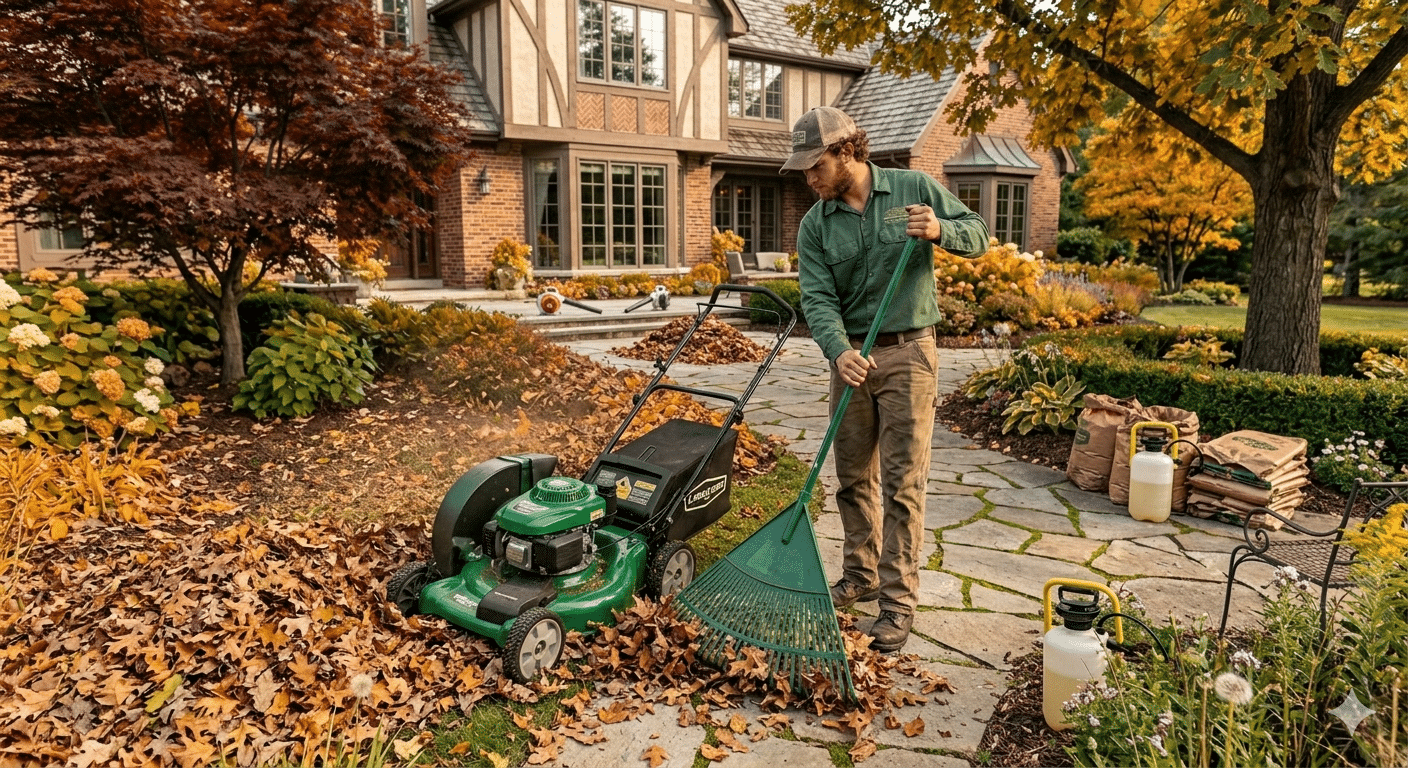
Mulching leaves means running your mower over them to chop them into small fragments that settle between grass blades. This approach has gained significant support from university turf researchers over the past decade.
A study from Michigan State University found that mulching leaves into turfgrass improved soil organic matter, reduced dandelion populations by up to 100 percent over three years, and produced no measurable harm to the turf. This research supports what many experienced lawn care professionals in the South have long recommended.
Mulching Returns Nutrients to the Soil
Leaves are rich in carbon, potassium, calcium, and trace minerals. When you mulch them into fine particles, soil microbes break them down over several weeks and release those nutrients directly into the root zone of your grass. You are essentially applying a free, slow-release organic fertilizer every time you mulch leaves.
For New Orleans lawns with clay-heavy or sandy soils, both of which benefit from improved organic matter content, regular leaf mulching over several seasons can meaningfully improve soil structure and water retention.
Mulching Saves Time and Reduces Yard Waste
Bagging leaves takes three to four times longer than mulching. You rake, bag, haul bags to the curb, and wait for pickup. With mulching, you make one or two additional passes with your mower and you are done. The leaves disappear into the lawn within a week.
When Removing Leaves Is the Better Option
When Leaf Volume Is Too High to Mulch Effectively
Mulching works when leaves cover less than 50 percent of the lawn surface. When you cannot see the grass through the leaves, mulching creates a heavy layer of chopped material that still blocks sunlight and traps moisture, just in smaller pieces.
If your lawn is completely covered in leaves, rake first to reduce the volume and then mulch the remainder. Alternatively, mow the lawn in multiple overlapping passes to achieve enough chopping to allow proper decomposition.
Wet, Matted Leaves Require Removal
New Orleans receives frequent rain year-round. Wet leaves mat together and compact far more quickly than dry leaves, forming a dense layer that smothers grass within days. If leaves have been sitting on your lawn for more than a week and are already matted and wet, removing them is faster and safer than trying to mulch through the mass.
Matted leaves also create ideal conditions for fungal disease. The same warm, wet, low-airflow environment that causes brown patch fungus in summer creates similar problems with smothering leaf layers in fall and winter.
Live Oak and Magnolia Leaves Decompose Slowly
New Orleans is famous for its live oaks, and those gorgeous trees create a specific lawn challenge. Live oak leaves are small, waxy, and dense. They decompose significantly more slowly than typical deciduous tree leaves, meaning they sit on your lawn for months rather than weeks.
Southern magnolia leaves are similarly thick and waxy with a high lignin content that resists microbial breakdown. If your yard is dominated by live oaks or magnolias, removing leaves rather than mulching is often the better long-term choice.
How to Mulch Leaves Correctly in a New Orleans Lawn
Step 1: Mow When Leaves Are Dry
Attempt leaf mulching only when leaves are dry. Mow at your normal cutting height and do not lower the blade to try to chop leaves more finely, as this can scalp your turf. Make overlapping passes so leaves are chopped multiple times.
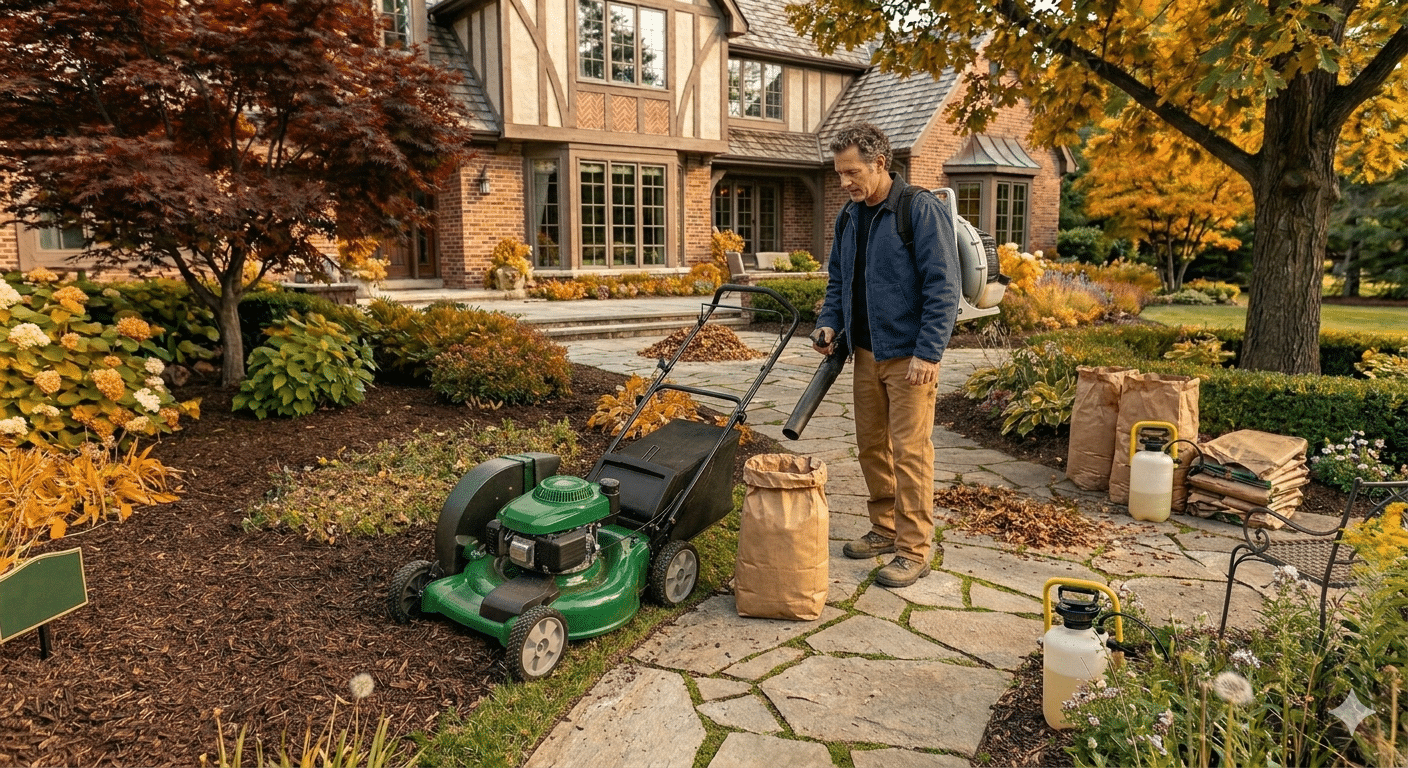
Step 2: Aim for Dime-Sized Pieces or Smaller
The goal is leaf fragments no larger than a dime. Larger pieces block sunlight and take too long to decompose. If your first pass leaves visible chunks, make a second overlapping pass at a 90-degree angle to the first.
Step 3: Do Not Let Leaves Accumulate
The key to successful leaf mulching is frequency. Do not wait until your yard is buried and then try to mulch everything at once. A weekly mulching pass during peak leaf drop keeps leaf volume manageable and fragments small enough to decompose quickly.
What Happens If You Leave Leaves on Your Lawn Too Long
Ignoring leaves, whether by not mulching or not removing them, is the worst option. Here is the progression of damage:
- Week 1 to 2: Partial sunlight blockage. Grass slows growth but survives.
- Week 2 to 3: Matting begins. Moisture traps under the leaf layer. Fungal spore germination increases significantly.
- Week 3 to 5: Grass beneath the mat begins to die from light deprivation and fungal disease combined.
- Week 5 and beyond: Dead patches form. Recovery requires overseeding or new sod installation.
When to Call a Professional for Leaf Cleanup
Most homeowners can manage routine leaf mulching with a standard mower. Professional lawn cleanup services are the right choice in these situations:
- Your property has multiple large trees and leaf volume is unmanageable alone. Large live oak canopies can drop leaves continuously from December through February.
- Leaves have already matted and you notice brown or dead patches developing. Professional cleanup paired with overseeding gets your lawn back to health faster.
- You want leaves removed and properly disposed of. Big Easy Grass Cutting handles leaf removal and disposal across New Orleans and surrounding communities.
Frequently Asked Questions
Is it better to mulch or bag leaves?
For most lawns, mulching is better. It returns nutrients to the soil, saves time, and requires no disposal. When leaf volume is very high, leaves are wet and matted, or your yard has slow-decomposing species like live oak, bagging prevents smothering and fungal disease.
How many leaves are too many to mulch?
If leaves cover more than 50 percent of your lawn surface and you cannot see green grass through the layer, reduce the volume by raking or blowing first, then mulch the remainder.
Do mulched leaves cause thatch?
No. Research consistently shows that properly mulched leaves do not contribute meaningfully to thatch buildup. Thatch is composed of grass stems, roots, and stolons, not decomposed leaf matter. Leaves chopped finely enough break down before they can accumulate in the thatch layer.
Can I mulch wet leaves?
Mulching wet leaves is not recommended. Wet leaves clump together rather than dispersing between grass blades and take much longer to decompose. Wait for dry conditions whenever possible, or remove wet leaves manually and compost them instead.
Will leaves kill my St. Augustine grass?
Leaves left on St. Augustine grass for more than two to three weeks in wet conditions can cause significant damage, including dead patches from light deprivation and fungal disease. St. Augustine is particularly sensitive because its thick horizontal growth habit means the canopy can collapse under even moderate leaf accumulation. Weekly management is important.
How much does leaf cleanup service cost in New Orleans?
Professional leaf cleanup in New Orleans typically costs between $75 and $250 depending on property size and leaf volume. Regular fall and winter cleanup visits are often included in seasonal lawn maintenance programs.
Should I mulch or rake leaves in winter in New Orleans?
New Orleans winters are mild enough that your lawn grass may still show some color through February. Continue mulching lightly through the season whenever leaves accumulate. Switch to raking and removal if you have a heavy leaf event from a live oak or magnolia, or if you notice signs of fungal disease developing under the leaf layer.
Do mulched leaves improve soil over time?
Yes. Research from Michigan State University and other university extension programs shows that three or more years of consistent leaf mulching measurably improves soil organic matter, reduces soil compaction, and decreases weed pressure. The benefit builds over time, making mulching an investment in your long-term lawn health.
Need Help Keeping Your Lawn Clear This Season?
Whether your yard needs a one-time leaf cleanup or ongoing fall and winter maintenance, Big Easy Grass Cutting has you covered across New Orleans, Metairie, Kenner, Gretna, Slidell, and the entire Greater New Orleans metro area.
Call 504-910-7829 or schedule your free estimate online today.
{ "@context": "https://schema.org", "@type": "Article", "headline": "Mulch or Remove Leaves From Your Lawn? The Right Answer for New Orleans Homeowners", "description": "Should you mulch or remove leaves from your lawn? Learn which method protects New Orleans grass best and when to use each.", "url": "https://www.bigeasygrasscutting.com/mulch-or-remove-leaves-from-lawn/", "author": { "@type": "Organization", "name": "Big Easy Grass Cutting", "url": "https://www.bigeasygrasscutting.com" }, "publisher": { "@type": "Organization", "name": "Big Easy Grass Cutting", "logo": { "@type": "ImageObject", "url": "https://www.bigeasygrasscutting.com/wp-content/uploads/2023/07/logo.png" } }, "mainEntity": { "@type": "FAQPage", "mainEntity": [ { "@type": "Question", "name": "Is it better to mulch or bag leaves?", "acceptedAnswer": { "@type": "Answer", "text": "For most lawns, mulching is better. It returns nutrients to the soil and saves time. When leaf volume is very high or leaves are wet and matted, bagging prevents smothering and fungal disease." } }, { "@type": "Question", "name": "Do mulched leaves cause thatch?", "acceptedAnswer": { "@type": "Answer", "text": "No. Research consistently shows that properly mulched leaves do not contribute meaningfully to thatch buildup. Thatch is composed of grass stems and roots, not decomposed leaf matter." } }, { "@type": "Question", "name": "How much does leaf cleanup service cost in New Orleans?", "acceptedAnswer": { "@type": "Answer", "text": "Professional leaf cleanup in New Orleans typically costs between $75 and $250 depending on property size and leaf volume." } } ] } }