


Kenner sits on flat, low ground between the Mississippi River and Lake Pontchartrain, and the weather station at its airport logs more than 63 inches of rain in a normal year. Add long summers with warm nights, and a St. Augustine lawn here faces fungus, insects and standing water on a cycle that repeats every year.
Lawn care in Kenner is mostly a water problem with heat stacked on top. Rain that falls on the city has little natural path to drain, and the same warm, wet weather that makes St. Augustine grass grow fast also feeds the diseases that thin it out.
That is why a lawn plan written for a drier or cooler place needs adjusting here. Knowing when large patch, gray leaf spot and chinch bugs tend to show up lets you mow, water and feed around them.
At Big Easy Grass Cutting, we care for lawns across Greater New Orleans, and our lawn care service in Kenner is tailored to the grass, the season and the conditions on each property.
If your St. Augustine is thinning, yellowing or holding water after storms, contact us for a free estimate and a second look at what is going on.
Below, we cover what makes Kenner’s conditions different, what goes wrong with St. Augustine grass here, and how each problem gets sorted out.
What Kenner’s Low Ground and Heavy Rain Mean for Your Lawn
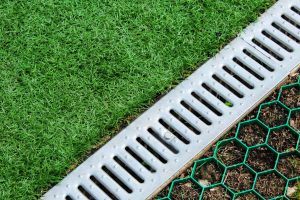 Kenner’s lawns grow on land that works against drainage. Almost every lawn decision here, from mowing height to fertilizer timing, traces back to that fact and to the heat that comes with it.
Flat Land Between the River and the Lake
The Mississippi River forms Kenner’s southern boundary, and Lake Pontchartrain sits to the north. The City of Kenner’s flood and drainage guidance notes that most of Kenner and Jefferson Parish lies at or below sea level, on land prone to subsidence.
The city also explains that this low, flat ground provides little natural gravity drainage. Rainwater has to be moved out through drainage canals and pump stations.
For a lawn, that means water landing in a low corner of the yard can stay there. Louisiana’s extension service warns that low spots hold water and stress grass, and a yard that stays soggy gives fungus the moisture it needs.
More Than 63 Inches of Rain in a Normal Year
Louis Armstrong New Orleans International Airport sits inside Kenner’s city limits, and its weather station anchors the local climate record. The National Weather Service’s 1991 to 2020 climate normals put the airport’s average annual rainfall at 63.35 inches.
June is the wettest month at 7.62 inches, and August follows with 6.91. October is the driest month at 3.70 inches, which is when a sprinkler system is most likely to earn its keep.
The wettest stretch lines up with summer, the main growing season for Louisiana lawns. Soggy soil and fast growth arrive together.
Long, Hot Summers With Warm Nights
The same NWS normals show average highs of 91.4 degrees in July and 91.3 in August at the airport. Average lows in both months stay above 76 degrees, so the grass gets little relief overnight.
Spring and fall carry a different risk. Normal lows run 61.7 degrees in April and 64.3 in October, which puts Kenner’s nights right inside the temperature band where large patch spreads fastest.
Common Causes of Saint Augustine Grass Trouble in Kenner
St. Augustine is a common warm-season lawn grass in Louisiana. LSU AgCenter describes it as well-suited to warm, humid weather, with more shade tolerance than other warm-season grasses. Its weak points line up closely with Kenner’s climate.
Large Patch in Spring and Fall
Large patch, formerly called brown patch, is caused by the soilborne fungus Rhizoctonia solani. According to LSU AgCenter’s large patch fact sheet, it develops fastest when nights run 60 to 75 degrees and days stay below about 85 to 90 degrees.
It also favors lawns hemmed in by trees, shrubs and fences, which slow drying after rain or irrigation. Excess nitrogen makes symptoms worse, and LSU AgCenter notes that St. Augustine is more prone to large patch than some other turfgrasses.
Gray Leaf Spot in Midsummer
Gray leaf spot is a leaf disease caused by the fungus Pyricularia grisea, and it commonly hits St. Augustine. In Louisiana it typically appears from midsummer to early fall.
It thrives in warm, humid weather between 82 and 90 degrees, with long periods of moisture on the leaf from rain, irrigation or morning dew. Drought stress, compacted soil, herbicide use and heavy nitrogen all favor it.
Southern Chinch Bugs in Hot, Dry Spells
The southern chinch bug is primarily a St. Augustine pest. It favors thick thatch, full sun and hot, dry weather, and most injury happens in mid-to-late summer.
In Louisiana, this insect can complete 3 to 4 generations a year. A dry week in a sunny Kenner yard during August is the setup to watch.
Thatch and Compacted Soil
Thatch builds up over time in St. Augustine lawns, and compaction forms faster on fine-textured soils and in high-traffic areas. Thatch shelters chinch bugs and gives the large patch fungus a home. Compaction slows drainage in a yard that already drains poorly.
Warning Signs Your Kenner Lawn Needs Attention
Each problem leaves a different mark on the grass. Reading the mark correctly keeps you from treating the wrong thing.
Yellow-Edged Patches That Pull Loose
Large patch shows up as circular or irregular patches that can grow quite large. On St. Augustine, the leading edge of each patch has a yellowish cast.
The fungus rots the base of the leaf sheath, so leaves pull easily off the stem while the roots stay unaffected. Grass inside the patch looks thin and sunken, and weeds often move in.
Spotted Blades With Tan Centers
Gray leaf spot starts as small, brownish, round to oblong spots on the leaf blades. As it progresses, the spots widen and develop dark brown margins with light tan centers.
In warm, humid weather, clusters of gray spores can appear in the middle of each spot. Infected blades eventually dry out, shrivel and die.
Yellow-Brown Areas in Full Sun
Chinch bug injury turns grass yellow, then brown, and then kills it. The damage starts in scattered patches that can merge into one large dead area, and it tends to follow sun and dry weather.
Water That Sits After a Storm
Puddles that linger in the same spot after every heavy rain point to a drainage or compaction issue. LSU AgCenter’s guidance for both large patch and gray leaf spot calls for improving internal soil drainage, so standing water is a disease warning as well as a nuisance.
It helps to note where puddles form after a downpour and how long they last. That simple record shows whether the problem is one low corner or the whole yard, which shapes the fix.
How Kenner Lawn Problems Are Diagnosed and Managed
Diagnosis starts with the season and the pattern of damage. Management is mostly cultural: mowing, watering, feeding and soil care done at the right height and time. LSU AgCenter treats fungicides and insecticides as a possible addition to those practices, applied strictly by the label.
| Problem | When It Shows Up in Kenner | First Cultural Step |
|---|---|---|
| Large patch | Spring and fall, when nights run 60 to 75 degrees | Water early in the morning, hold nitrogen to label rates, skip mowing wet grass |
| Gray leaf spot | Midsummer to early fall, in humid 82 to 90 degree weather | Avoid quick-release nitrogen in summer, water deeply and early |
| Southern chinch bug | Mid-to-late summer, in hot, dry, sunny spots | Run a flush test, reduce thatch, water as rainfall requires |
| Standing water and compaction | After heavy rain, in any season | Aerate to improve internal drainage and loosen compacted soil |
The Flush Test for Chinch Bugs
The extension service’s flush test is simple. Mix 1 tablespoon of lemon-scented soap into 1 gallon of water, then pour it slowly over healthy grass at the edge of the damage.
Drench about 1 square foot in wet conditions or 4 square feet in dry conditions, and watch for 5 to 10 minutes. Its chinch bug guide suggests insecticide treatment when 25 to 30 chinch bugs per square foot come to the surface.
Mowing at the Right Height
LSU AgCenter recommends mowing St. Augustine at 2.5 to 3 inches in sun and 3 to 3.5 inches in shade, never removing more than one-third of the blade at once. The right height helps prevent scalping and weed encroachment.
When disease is active, raise the height to help recovery, skip mowing while blades are wet, and mow infected areas last. Our residential lawn mowing service adjusts cutting height to the grass species, the season and the weather.
Watering and Feeding on a Saint Augustine Schedule
In a normal year, rainfall may carry a St. Augustine lawn, so irrigation is mainly for dry spells. When you do water, go early in the morning, deeply and as infrequently as the grass allows. LSU AgCenter horticulturist Dan Gill notes that lawns need no more than about 1 inch of water a week, even in the hottest part of summer.
For fertilizer, LSU AgCenter suggests 1 pound of actual nitrogen per 1,000 square feet in April and June, with an optional August feeding, and never more than 1 pound per application. Our lawn fertilization program is matched to your soil, grass species and conditions.
Aeration for Drainage and Thatch
LSU AgCenter lists aeration as a way to improve internal soil drainage and reduce compaction, and it recommends dethatching or aerating in late spring to early summer while the grass is actively growing. For a Kenner yard that holds water after storms, lawn aeration is a practical first step.
What This Means for Lawn Care in Kenner
A healthy St. Augustine lawn in Kenner comes from working with the calendar and the ground it grows on, not against them. Watch for large patch when nights cool in spring and fall, for gray leaf spot and chinch bugs in the heat of summer, and for drainage trouble after every big storm.
Acting at the first sign of a patch, a spotted blade or a soggy corner keeps a small problem from spreading across the yard.
At Big Easy Grass Cutting, we mow, feed, aerate and maintain lawns throughout Kenner with a plan tailored to each property.
To set up lawn care for your Kenner home, call us at 504-910-7829 for a free estimate.
Frequently Asked Questions
Why Is My Saint Augustine Grass Dying?
In Kenner, three common culprits are large patch, gray leaf spot and southern chinch bugs, and the season helps tell them apart. Large patch appears in spring and fall as yellow-edged patches where leaves pull off easily. Gray leaf spot leaves tan-centered spots from midsummer to early fall, while chinch bugs cause yellow-brown dead areas in hot, dry weather.
Is Saint Augustine Grass Hard to Maintain?
It takes more care than some Louisiana lawn grasses, but it is manageable on a steady routine. It needs more fertilizer than centipedegrass, regular mowing at 2.5 to 3 inches, and an eye out for large patch and chinch bugs. In return, it handles warm, humid weather well and tolerates moderate shade.
When Should I Water My Saint Augustine Grass?
Water early in the morning, and only when rainfall falls short. Early watering lets the leaves dry during the day, which LSU turf guidance ties to less large patch and gray leaf spot. Water deeply and infrequently, and plan on no more than about 1 inch a week in summer.
Should Saint Augustine Grass Be Bagged?
Usually not, as long as you mow at the right height and often enough. LSU AgCenter notes that properly managed clippings do not add to thatch and return nutrients to the lawn as they break down. Bag or rake them when they form clumps, which happens when the grass gets too tall between mowings or is cut wet.
When to Fertilize Saint Augustine Grass in South Louisiana?
Fertilize in April and June, with an optional third feeding in August. LSU AgCenter suggests 1 pound of actual nitrogen per 1,000 square feet each time and no more than 3 pounds a year. Feeding too early or too late in the year raises the risk of large patch.
Does Saint Augustine Grass Spread?
Yes, it spreads quickly through stolons, the aboveground stems that run across the soil surface. LSU AgCenter notes that no commercial St. Augustine seed is currently available in Louisiana, so lawns are started from sod or from plugs set about 1 foot apart. That same spreading habit is how thin areas can fill back in once the cause of the damage is corrected.
Is Saint Augustine Grass Native to Louisiana?
Possibly, since the University of Florida IFAS Extension says it is believed to be native to the coastal regions of both the Gulf of Mexico and the Mediterranean. Whatever its exact origin, it is well-suited to Louisiana’s warm, humid weather, though it has a low tolerance for cold.
When to Plant Saint Augustine Grass in Louisiana?
April through September gives sod the best establishment, and April through August works best for plugs, according to LSU AgCenter. Sod can go down year-round with extra care. Keep new sod watered until the roots take hold, and avoid low spots that stay waterlogged.

Related Service
Residential Lawn Mowing
Lawn perfection at your doorstep.
See our Kenner service area page