Navigation

504-910-7829

A yard cleanup is a one-time or seasonal reset of your outdoor space. It clears leaves, fallen limbs, and storm debris, cuts back overgrowth, mows and edges the lawn, and hauls the waste away. In New Orleans, yards collect debris on more than one schedule, so knowing what a cleanup covers helps you book the right work at the right time.

So what does yard cleanup include, and when does your yard actually need one? The weather calendar answers a big part of that. According to the National Hurricane Center, the Atlantic hurricane season runs from June 1 to November 30, and it peaks on September 10, with most activity between mid-August and mid-October.

That peak lands right before fall. Wind and rain from a passing system can leave limbs, leaves, and trash across a lawn that was spotless a week earlier.

At Big Easy Grass Cutting, we clean up lawns across Greater New Orleans, from overgrown yards to properties littered after a storm. Our team removes leaves and debris, trims back unruly plants and bushes, mows, edges, and disposes of everything we remove.

If your yard needs a reset before the next storm or the next season, contact us to request a free estimate.

Below, we break down each cleanup task, the times of year New Orleans yards need one, and how the city handles the yard waste a cleanup produces.

What Does a Yard Cleanup Include?

A yard cleanup includes clearing leaves, sticks, and loose debris, cutting back overgrown plants, mowing and edging the lawn, and removing the waste from the property. Some cleanups add weed control or fertilization once the ground is clear.

National cost guides describe the same core list. HomeAdvisor’s 2026 yard cleanup cost guide breaks the work into separate line items: leaf removal, hauling away debris, mowing overgrown grass, weeding, installing mulch, and hedge or tree pruning.

Our lawn cleanup service in New Orleans focuses on the tasks that get a yard back to a tidy, mowable state. Here is what each one involves.

Cleanup Task What It Covers Why It Matters
Leaf and debris removal Leaves, sticks, and loose debris cleared from the turf and hard surfaces Clears the lawn so it can be mowed and checked for problems
Storm limb pickup Fallen limbs and broken branches gathered after wind and rain Hurricane season runs June 1 to November 30
Mowing overgrown grass Grass that got ahead of the schedule cut back to a manageable height Makes the yard usable and ready for regular mowing
Trimming plants and bushes Unruly shrubs and overgrowth cut back around the yard Keeps plants off walkways and restores the shape of the yard
Lawn edging Clean lines cut along sidewalks, driveways, and beds Gives the finished lawn crisp, defined borders
Waste disposal Everything removed is bagged, loaded, and hauled off the property No piles left at the curb waiting for a collection day

The order of those tasks matters. Debris comes off first, trimming and mowing follow, edging sharpens the lines, and haul-away closes out the job.

How Does a Professional Lawn Cleanup Work?

A professional cleanup follows a set sequence, and each stage makes the next one easier. Here is how the work breaks down on a typical yard.

Clearing Leaves, Limbs, and Storm Debris

The first pass takes everything loose off the ground. Leaves, sticks, fallen limbs, and wind-blown trash come off the turf, the beds, and the paved areas.

This step protects the equipment that comes next. The LSU AgCenter advises picking up sticks and debris that built up over winter before your first spring mow, because it extends the life of the mower blade. The same logic applies after any storm.

What happens to the leaves afterward is its own decision. Our guide on whether to mulch or remove leaves from your lawn covers that choice in detail.

Trimming, Mowing, and Edging

Hedge trimmer shaping an overgrown shrub beside a brick wall during a yard cleanupWith the ground clear, the overgrowth gets cut back. We trim unruly plants and bushes first, so clippings land on turf that is about to be mowed anyway.

Mowing brings grass that got ahead of the schedule back to a manageable height. Edging comes last in this stage, cutting clean lines along the sidewalk, the driveway, and the beds. After the cleanup, our lawn edging service can keep those lines sharp.

Hauling Away the Waste

A cleanup produces more material than you might expect. Bags of leaves, bundles of limbs, and piles of trimmings add up fast, even on a small city lot.

Disposal is part of our lawn cleanup, so the waste leaves the property with us. That matters in New Orleans, where the city limits how much yard waste it collects from the curb on a single collection day.

When Do New Orleans Yards Need a Cleanup?

A New Orleans yard can need a cleanup at several points in the year, because debris arrives on more than one schedule. Three windows stand out.

Spring leaf drop and the first mow. Live oaks behave differently from the trees in colder states. LSU AgCenter guidance explains that live oaks keep their leaves all year except for a short window in spring when they push out new growth. The AgCenter also notes that it is normal for a live oak to drop all of its leaves in spring, though the amount varies by tree and by year.

Spring is also when the season’s first mow happens. The LSU AgCenter’s spring lawn care guidance notes that warm-season turf is not fully awake until the soil reaches at least 60 F. It recommends clearing winter debris first and setting the first mow a little lower than normal to remove old, decaying shoots that can harbor disease.

Hurricane season. The National Hurricane Center puts the season peak on September 10, with most activity from mid-August to mid-October. A storm cleanup focuses on limbs, branches, and scattered debris, and it should happen before the grass underneath starts to suffer.

Fall slowdown. A fall yard cleanup looks different here than in the North. The LSU AgCenter notes that warm-season grasses such as St. Augustine, centipede, Bermuda, and zoysia slow down as the weather cools. Most will be completely or partially dormant by mid-to-late November or December, and St. Augustine may not go fully dormant in a mild South Louisiana winter.

That slowdown shapes what a fall cleanup should include. LSU advises against filling, aerating, or dethatching while the turf is slowing down, so a fall cleanup should clear debris and leaves without tearing up the grass. A clear lawn also makes it easier to spot brown patch, a fungus LSU says shows up in St. Augustine during cooler, wetter months.

How Do You Get Rid of Yard Waste in New Orleans?

Getting the debris off the lawn is half the job. The other half is getting it off the property, and in Orleans Parish the city has specific rules for that.

Curbside Yard Waste Limits

The City of New Orleans publishes its curbside yard waste rules on its trash collection page. Yard waste means fewer than 6 bags of leaves, weeds, grass, and small clippings, with each bag weighing 50 pounds or less.

Tree limbs follow a similar limit. The city takes fewer than 6 bundles of small limbs, each bundle under 4 feet long, 12 inches in diameter, and 50 pounds. Yard waste goes next to your cart on your collection day, and putting it out more than 24 hours early can bring a fine.

Other parishes in the metro set their own collection rules, so check with your parish if you live outside Orleans.

Storm Debris and Drop-Off Sites

After a storm, the rules shift. According to the city’s storm debris page, city contractors pick up certain kinds of debris curbside, and residents can call 311 to request debris pickup.

The city also lists three drop-off sites that accept debris, and fees apply. Dumping debris on neutral grounds or in vacant lots is illegal, and the city says it will enforce that.

When a Crew With Haul-Away Makes Sense

A full cleanup on a yard with mature trees or heavy storm damage can produce more than the curbside limits allow on one collection day. Waiting for multiple collection days leaves bags and bundles sitting in the yard.

That is where a cleanup with disposal included saves time. Once the yard is reset, regular residential lawn mowing keeps clippings and overgrowth from building back up between seasons.

Where to Start With Your Lawn Cleanup

New Orleans yards take debris from spring oak leaf drop, from storms during a hurricane season that peaks in September, and from the slowdown that comes as the grass heads toward dormancy. Each of those windows leaves the lawn harder to mow and harder to keep healthy.

The easiest place to start is with the season you are in right now. Walk the yard, note the leaves, limbs, and overgrown spots, and decide whether the waste will fit within the city’s curbside limits.

At Big Easy Grass Cutting, we handle the full cleanup, from debris removal and trimming to mowing, edging, and hauling everything away. Tell us what your yard looks like, and we will put together a free estimate. Call us today at 504-910-7829.
Free Estimate

Request Your Free Estimate

Navigation

504-910-7829

For most New Orleans lawns, mulching leaves directly into the grass is the better choice. It returns valuable nutrients to the soil, reduces lawn waste, and saves you significant time. However, when leaves are thick, wet, or composed of slow-decomposing species like live oak, removing them is the safer option. The key is knowing which situation you are dealing with and acting before leaves mat down and damage your turf.

Every fall and winter in New Orleans, the leaf question comes up: should you mulch or bag? The answer actually depends on your specific grass type, the types of trees in your yard, leaf volume, and current lawn conditions.

This guide gives you a clear framework for making the right decision and explains the proven benefits and real risks of each approach in Louisiana’s unique climate.

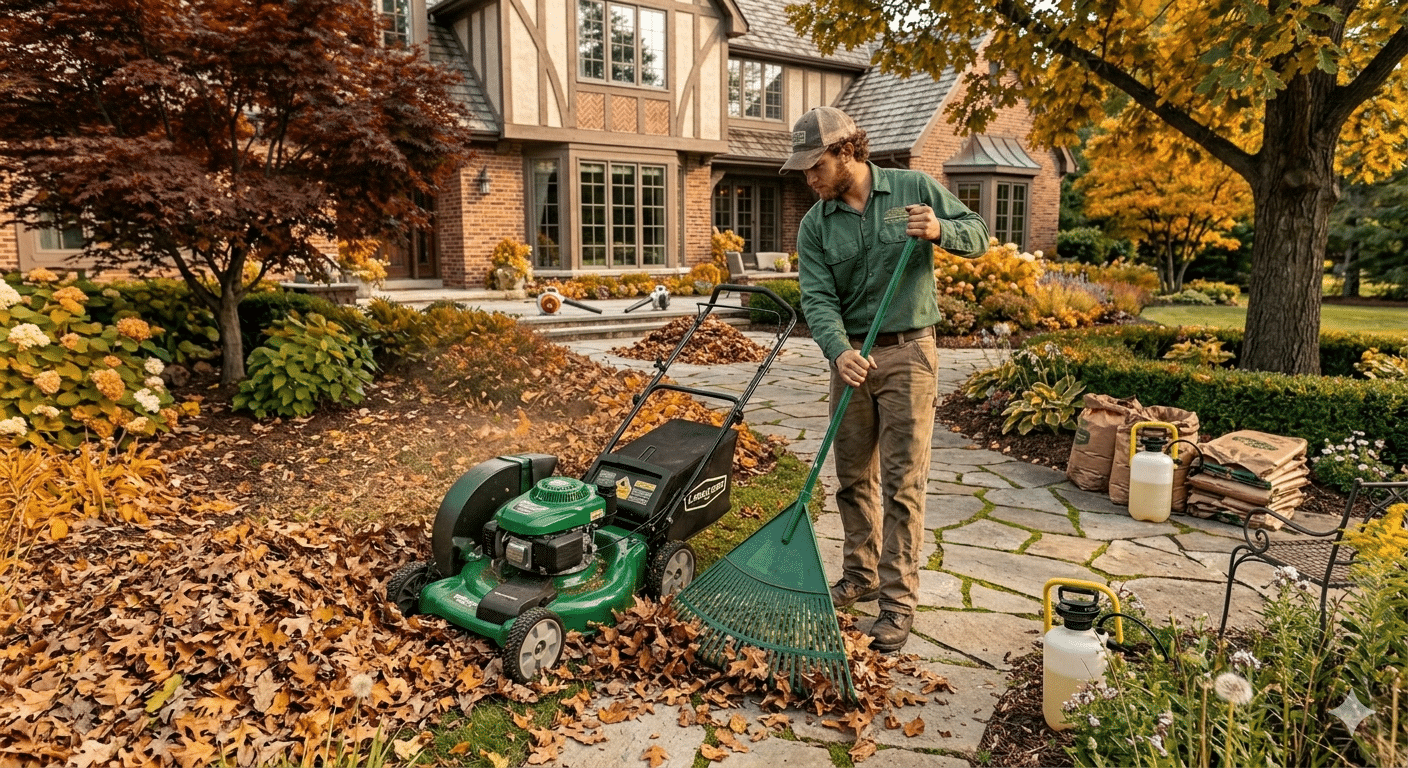
Mulching autumn leaves into a New Orleans lawn with a mower to return nutrients to the soil

The Case for Mulching Leaves Into Your Lawn

Mulching leaves means running your mower over them to chop them into small fragments that settle between grass blades. This approach has gained significant support from university turf researchers over the past decade.

A study from Michigan State University found that mulching leaves into turfgrass improved soil organic matter, reduced dandelion populations by up to 100 percent over three years, and produced no measurable harm to the turf. This research supports what many experienced lawn care professionals in the South have long recommended.

Mulching Returns Nutrients to the Soil

Leaves are rich in carbon, potassium, calcium, and trace minerals. When you mulch them into fine particles, soil microbes break them down over several weeks and release those nutrients directly into the root zone of your grass. You are essentially applying a free, slow-release organic fertilizer every time you mulch leaves.

For New Orleans lawns with clay-heavy or sandy soils, both of which benefit from improved organic matter content, regular leaf mulching over several seasons can meaningfully improve soil structure and water retention.

Mulching Saves Time and Reduces Yard Waste

Bagging leaves takes three to four times longer than mulching. You rake, bag, haul bags to the curb, and wait for pickup. With mulching, you make one or two additional passes with your mower and you are done. The leaves disappear into the lawn within a week.

When Removing Leaves Is the Better Option

When Leaf Volume Is Too High to Mulch Effectively

Mulching works when leaves cover less than 50 percent of the lawn surface. When you cannot see the grass through the leaves, mulching creates a heavy layer of chopped material that still blocks sunlight and traps moisture, just in smaller pieces.

If your lawn is completely covered in leaves, rake first to reduce the volume and then mulch the remainder. Alternatively, mow the lawn in multiple overlapping passes to achieve enough chopping to allow proper decomposition.

Wet, Matted Leaves Require Removal

New Orleans receives frequent rain year-round. Wet leaves mat together and compact far more quickly than dry leaves, forming a dense layer that smothers grass within days. If leaves have been sitting on your lawn for more than a week and are already matted and wet, removing them is faster and safer than trying to mulch through the mass.

Matted leaves also create ideal conditions for fungal disease. The same warm, wet, low-airflow environment that causes brown patch fungus in summer creates similar problems with smothering leaf layers in fall and winter.

Live Oak and Magnolia Leaves Decompose Slowly

New Orleans is famous for its live oaks, and those gorgeous trees create a specific lawn challenge. Live oak leaves are small, waxy, and dense. They decompose significantly more slowly than typical deciduous tree leaves, meaning they sit on your lawn for months rather than weeks.

Southern magnolia leaves are similarly thick and waxy with a high lignin content that resists microbial breakdown. If your yard is dominated by live oaks or magnolias, removing leaves rather than mulching is often the better long-term choice.

How to Mulch Leaves Correctly in a New Orleans Lawn

Step 1: Mow When Leaves Are Dry

Attempt leaf mulching only when leaves are dry. Mow at your normal cutting height and do not lower the blade to try to chop leaves more finely, as this can scalp your turf. Make overlapping passes so leaves are chopped multiple times.

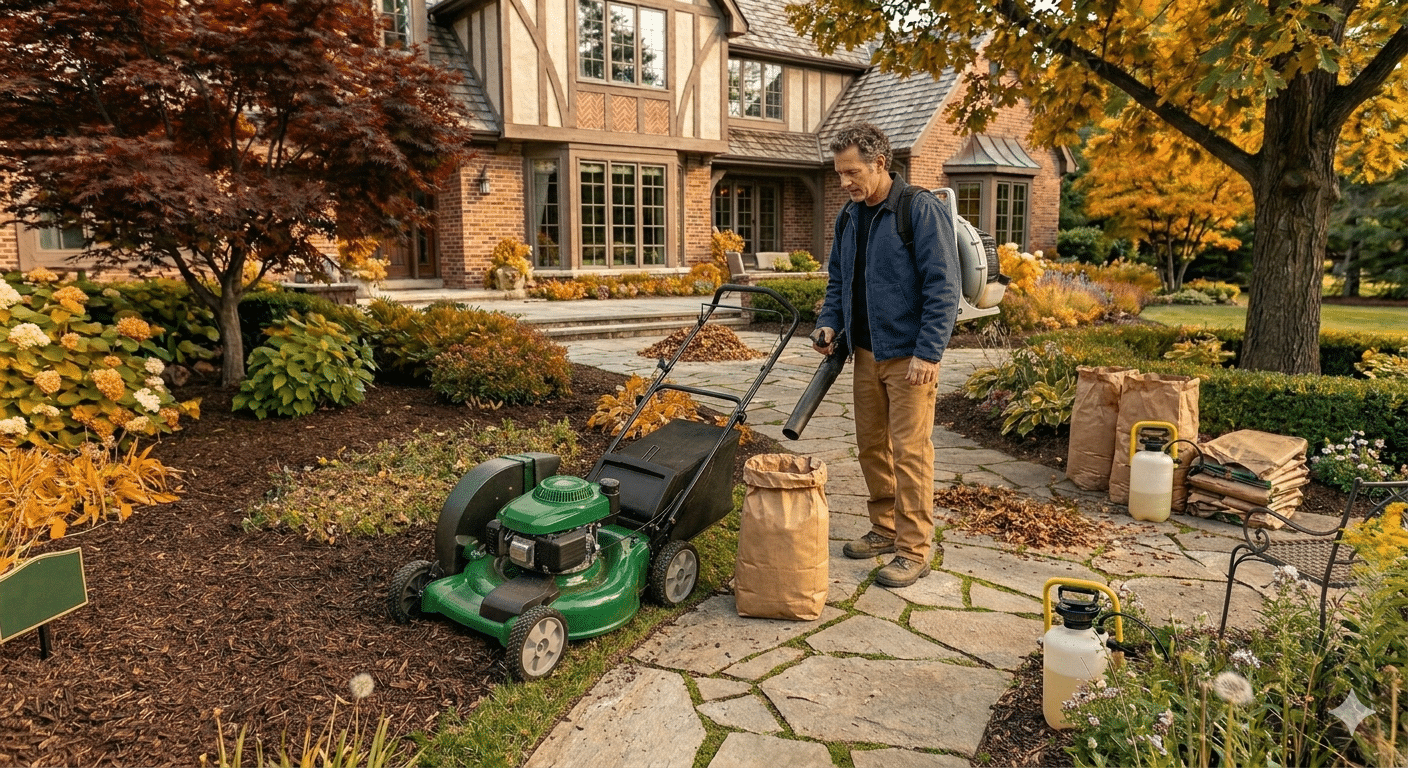
Professional leaf cleanup and mulching service in New Orleans removing matted leaves from turf

Step 2: Aim for Dime-Sized Pieces or Smaller

The goal is leaf fragments no larger than a dime. Larger pieces block sunlight and take too long to decompose. If your first pass leaves visible chunks, make a second overlapping pass at a 90-degree angle to the first.

Step 3: Do Not Let Leaves Accumulate

The key to successful leaf mulching is frequency. Do not wait until your yard is buried and then try to mulch everything at once. A weekly mulching pass during peak leaf drop keeps leaf volume manageable and fragments small enough to decompose quickly.

What Happens If You Leave Leaves on Your Lawn Too Long

Ignoring leaves, whether by not mulching or not removing them, is the worst option. Here is the progression of damage:

  • Week 1 to 2: Partial sunlight blockage. Grass slows growth but survives.
  • Week 2 to 3: Matting begins. Moisture traps under the leaf layer. Fungal spore germination increases significantly.
  • Week 3 to 5: Grass beneath the mat begins to die from light deprivation and fungal disease combined.
  • Week 5 and beyond: Dead patches form. Recovery requires overseeding or new sod installation.

When to Call a Professional for Leaf Cleanup

Most homeowners can manage routine leaf mulching with a standard mower. Professional lawn cleanup services are the right choice in these situations:

  • Your property has multiple large trees and leaf volume is unmanageable alone. Large live oak canopies can drop leaves continuously from December through February.
  • Leaves have already matted and you notice brown or dead patches developing. Professional cleanup paired with overseeding gets your lawn back to health faster.
  • You want leaves removed and properly disposed of. Big Easy Grass Cutting handles leaf removal and disposal across New Orleans and surrounding communities.

Free Estimate

Request Your Free Estimate

Navigation

504-910-7829

A lush, vibrant lawn is the crown jewel of any home. It not only enhances your property’s curb appeal but also provides a welcoming outdoor space for your family and guests.

However, achieving and maintaining a healthy lawn requires a bit of know-how, especially considering the changing seasons. In this guide, we’ll walk you through essential seasonal lawn care tips to keep your grass looking its best year-round.

Why Seasonal Lawn Care Matters

A well-maintained lawn is more than just a patch of grass; it’s a testament to your dedication and the envy of your neighbors. Seasonal lawn care is the backbone of achieving this.

Each season presents unique challenges and opportunities for your lawn, and understanding how to address them is crucial. So, whether you’re looking to boost your curb appeal or simply enjoy a lush outdoor space, this guide is for you.

At Big Easy Grass Cutting, we’re passionate about helping you achieve the lawn of your dreams. Our team of experts has been in the lawn care business for years, and we understand the unique needs of lawns in our region. With our professional guidance and top-notch services, you can trust us to keep your grass looking its best, no matter the season.

Spring: Preparing for Growth

As the temperatures rise and nature awakens, your lawn enters a period of rapid growth. Here’s how to kickstart the season right:

  • Cleaning Up Winter Debris

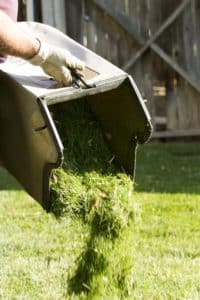
Dumping Grass ClippingsThe first step to a healthy spring lawn is a thorough cleanup. Remove fallen branches, leaves, and any debris that has accumulated over the winter.
This allows your grass to breathe and receive the sunlight it needs to thrive.

  • Aeration and Dethatching

Spring is an excellent time to aerate your lawn and dethatch it if necessary.

Aeration helps in oxygenating the soil, allowing water and nutrients to penetrate deeper. Dethatching removes dead grass and debris that can suffocate your lawn.

  • Early Fertilization

Apply a balanced fertilizer early in the spring to provide your grass with the nutrients it needs for vigorous growth. Look for a fertilizer with a higher nitrogen content to promote green, leafy growth.

  • Weed Control

Spring is also when weeds start to emerge. Tackle them early with an appropriate herbicide to prevent them from taking over your lawn.

  • Proper Mowing Techniques

Adjust your mower blades to a higher setting in spring. Cutting the grass too short can stress it and make it more susceptible to disease and pests. Aim to remove only one-third of the grass blade’s height at a time.

Summer: Maintaining the Green

Summer brings warmth and longer days, but it can also be challenging for your lawn. Here’s how to keep it looking vibrant:

  • Consistent Watering

Water deeply but infrequently to encourage deep root growth. Early morning is the best time to water, as it allows the grass to dry before evening, reducing the risk of disease.

  • Appropriate Lawn Height

Maintain your lawn at a height of around 3 inches during the summer. Taller grass shades the soil, reducing evaporation and helping it retain moisture.

  • Summer Fertilization

Apply a slow-release fertilizer in late spring or early summer to sustain your grass throughout the season. Be cautious not to over-fertilize, as this can lead to excessive growth and increased mowing.

  • Dealing With Pests

Summer is prime time for lawn pests like grubs and chinch bugs. Keep an eye out for signs of infestations and address them promptly with appropriate treatments.

  • Shade Management

If you have shaded areas in your lawn, pay special attention to them during summer. These areas may require less water and different types of grass that are shade-tolerant.

Fall: Preparing for Winter

As the temperatures cool down, your lawn prepares for the dormant winter months. Ensure it’s ready for the challenges ahead:

  • Late Season Fertilization

Apply a fall-specific fertilizer to strengthen your grass’s roots and provide essential nutrients for the coming winter.

  • Overseeding

Overseeding in the fall can help fill in bare patches and rejuvenate your lawn. Choose a grass seed blend that suits your region and soil type.

  • Raking Leaves

Keep your lawn clear of fallen leaves to prevent them from smothering your grass and creating damp, mold-prone areas.

  • Winterizing Your Equipment

As the mowing season winds down, clean and store your lawn equipment properly. This includes draining fuel from lawnmowers and properly storing tools.

  • Pest Prevention

Fall is an ideal time for pest prevention. Apply treatments to ward off winter pests like rodents that can damage your lawn during hibernation.

Winter: Minimal Maintenance

While winter demands less attention for your lawn, some care is still essential:

  • Keeping Off the Grass

lawn mowingAvoid walking on frozen or frost-covered grass, as it can damage the blades and lead to dead spots.

  • Snow Removal

If your region experiences heavy snowfall, keep your lawn clear of snow to prevent it from smothering the grass.

  • Monitoring Lawn Health

Take advantage of the downtime to inspect your lawn for any signs of disease, pest damage, or other issues that may require attention in the spring.

  • Planning for Spring

Use the winter months to plan your spring lawn care regimen. This includes purchasing any necessary supplies and scheduling services like aeration and dethatching.

Your Year-Round Lawn Care Checklist

Maintaining a healthy lawn year-round requires dedication and a well-thought-out approach. By following these seasonal lawn care tips, you’ll be well on your way to achieving that lush, vibrant grass you’ve always wanted.

And if you ever need professional assistance, don’t hesitate to reach out to Big Easy Grass Cutting. We’re here to help you make your lawn the envy of the neighborhood, no matter the season.

In closing, remember that a beautiful lawn is a long-term investment. With the right care at the right time, you can enjoy a lush, green carpet of grass throughout the year. Happy lawn care!

Free Estimate

Request Your Free Estimate

Call

Get a Free Estimate

A few details and we will get back to you. Prefer the phone? Call 504-910-7829.