
Navigation

504-910-7829

Keeping your lawn looking great between mowing sessions comes down to consistent watering, timely fertilization, weed management, and a few targeted habits that take less than 15 minutes a week. In New Orleans, where heat and humidity put extra pressure on turf, these steps make the difference between a lawn that fades between cuts and one that looks great all week long.

Mowing is the most visible part of lawn care, but it only happens once every one to two weeks. What you do in between those cuts has a bigger impact on your lawn’s overall health than the cut itself.

This guide covers the seven most effective actions you can take between mowing sessions to keep your New Orleans lawn thriving through every season.

Lush, healthy lawn in New Orleans maintained with proper watering and between-mow care routines

Water Deeply, Not Daily

The most common between-mow mistake New Orleans homeowners make is watering too frequently and too lightly. Short daily watering trains grass roots to stay shallow, making your lawn more vulnerable to heat and drought stress.

Instead, water deeply one to two times per week, delivering about 1 inch of water per session. Deep watering pushes moisture down 6 to 8 inches into the soil, encouraging roots to follow. Deeper roots mean a more drought-tolerant and resilient lawn.

Best Time to Water in New Orleans

Water between 6 a.m. and 10 a.m. so blades dry before nightfall. Wet grass overnight creates the warm, humid conditions that invite brown patch fungus, which is one of the most destructive lawn diseases in South Louisiana.

New Orleans averages over 60 inches of rainfall per year, so check soil moisture before you irrigate. If the soil is still moist 3 inches down, skip that session. Overwatering after rain is one of the top causes of root rot and fungal problems in local lawns.

Stay on Top of Weeds Between Cuts

Weeds do not wait for your mowing schedule. Dollar weed, crabgrass, nutsedge, and clover can establish and spread significantly in the days between cuts, especially in Louisiana’s warm, wet growing season.

  • Spot-treat actively growing weeds with a post-emergent herbicide as soon as you see them. Small weeds are far easier to kill than established ones.
  • Maintain the correct mowing height for your grass type. Taller grass shades the soil and prevents weed seeds from getting the sunlight they need to germinate.
  • Apply pre-emergent herbicide in spring before weed seeds sprout. This one application dramatically reduces weed pressure for the rest of the season.

For persistent weed problems, professional weed control services provide targeted treatment without risking damage to your desirable grass.

Feed Your Lawn on a Consistent Schedule

Fertilizing is not a once-a-year task. It is an ongoing process that directly affects how well your lawn looks between mowing sessions. A well-fed lawn stays greener, recovers faster from stress, and maintains the density needed to crowd out weeds.

For warm-season grasses common in New Orleans, including St. Augustine, Bermuda, Centipede, and Zoysia, fertilize every six to eight weeks during the active growing season from April through early September. Use a slow-release nitrogen formula to avoid the risk of fertilizer burn.

Avoid fertilizing in midsummer heat above 90 degrees Fahrenheit or during drought conditions. Schedule applications for late afternoon or early morning when temperatures are lower.

Keep Edges Neat Between Mowing Days

A freshly mowed lawn can still look unkempt if the edges along sidewalks, driveways, and flower beds are ragged. Grass along hard surfaces keeps growing continuously, and a weekly pass with a string trimmer or lawn edger keeps those crisp lines that signal a well-maintained yard.

Pay special attention to fence lines and areas around tree bases. These spots are easy to miss during a full mowing session and become the first things visitors notice.

Big Easy Grass Cutting’s lawn edging service keeps borders sharp and clean as part of a regular maintenance schedule.

Clear Debris Before It Damages Turf

Leaves, twigs, and other debris that accumulate between mowing sessions can cause more damage than they appear to. Matted leaves block sunlight, trap moisture, and create ideal conditions for fungal disease while smothering the grass underneath.

Make a quick scan of your lawn two to three times per week, especially during fall when New Orleans’ live oaks and other trees drop steadily. A quick rake or leaf blower pass takes about five minutes and prevents dead patches that could take weeks to recover.

Grass clippings from your last mow are fine to leave if they are short and scattered. They decompose quickly and return nitrogen to the soil. Thick clumps, however, should be raked up to prevent smothering.
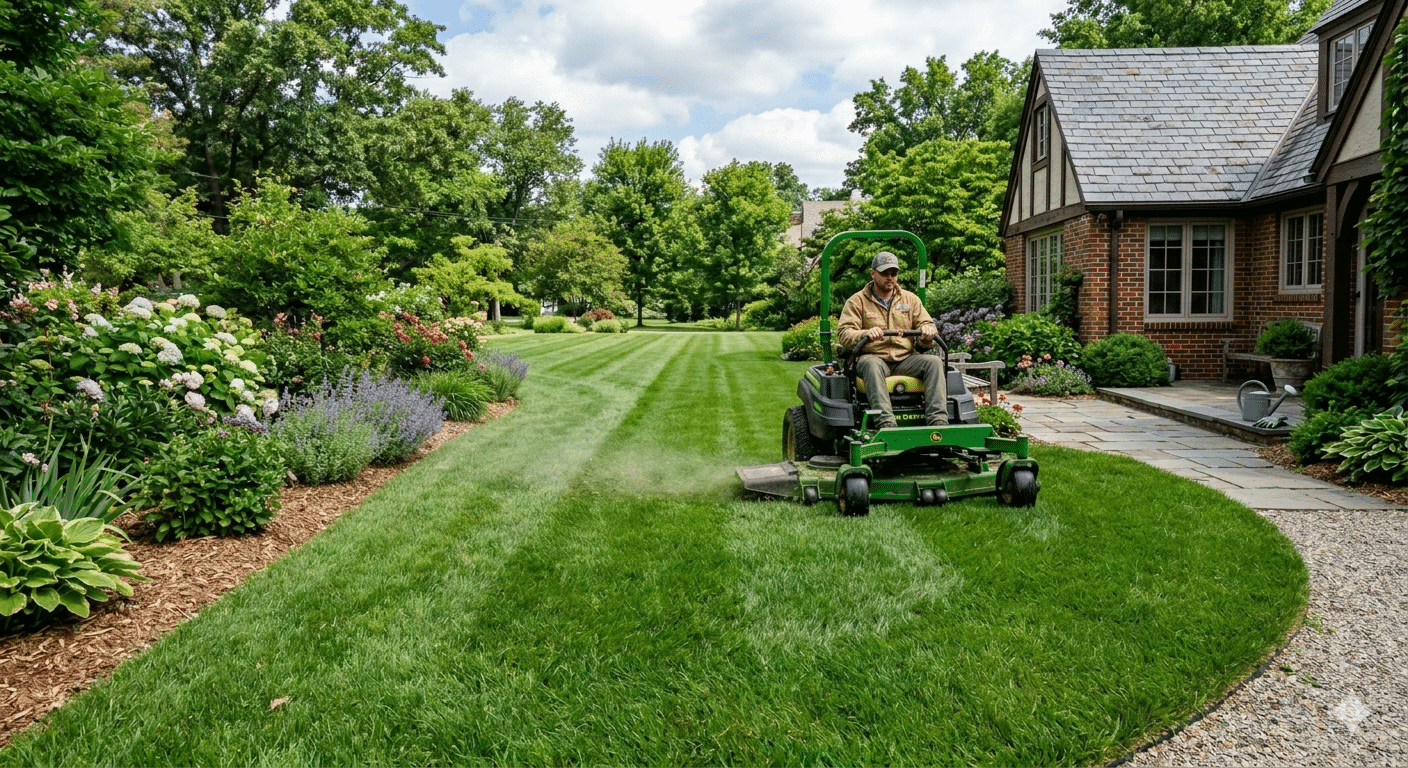
Professional lawn mowing service in New Orleans keeping grass at the ideal height between sessions

Watch for Pest and Disease Signs

South Louisiana’s warm, humid climate creates ideal conditions for lawn pests and fungal diseases. Between mowing sessions is when problems tend to develop unnoticed. A five-minute visual inspection twice a week can catch issues before they spread.

Look for these warning signs between cuts:

  • Circular brown patches ranging from a few inches to several feet. This is a classic sign of brown patch fungus, especially after warm, wet nights.
  • Yellowing patches that do not respond to watering. This may indicate chinch bugs, the most destructive pest for St. Augustine grass in Louisiana.
  • Sections of turf that pull up easily like loose carpet. This is a sign of white grub damage to the root system.

If you spot any of these issues, address them promptly. Fungal diseases and insect infestations spread rapidly in Louisiana’s climate and can take out large sections of lawn within a single week.

Adjust Your Approach by Season

Between-mow lawn care looks different depending on the time of year. In New Orleans, where seasons are temperature-driven rather than calendar-driven, adapting your habits to the season matters.

  • Spring (March to May): Apply pre-emergent weed control, begin fertilizing, and increase watering frequency as temperatures rise.
  • Summer (June to August): Water in the morning, watch closely for pests and fungal disease, and spot-treat weeds as they appear.
  • Fall (September to November): Gradually reduce watering frequency, apply a potassium-rich fertilizer to harden roots before winter, and keep up with fallen leaves.
  • Winter (December to February): Minimal watering, skip fertilizer entirely, and apply pre-emergent in late February before spring weed pressure begins.

When Should You Call a Professional?

Most between-mow maintenance can be handled by homeowners with the right knowledge. There are situations, however, where professional lawn care delivers results that DIY cannot:

  • Your lawn has persistent bare patches or thinning turf despite consistent watering and fertilization. This may require lawn aeration or overseeding.
  • Weeds keep coming back despite treatment. A professional assessment identifies the weed type and applies the correct product at the right time.
  • You do not have time to maintain a consistent schedule. Big Easy Grass Cutting’s residential lawn mowing and maintenance programs take care of everything between cuts.

Our team serves homeowners across New Orleans, Metairie, Kenner, Slidell, and the surrounding region. Get a free estimate today.

Free Estimate

Request Your Free Estimate

Navigation

504-910-7829

Overseeded grass typically begins to germinate within 7 to 21 days, depending on the grass species, soil temperature, and moisture levels. Cool-season grasses like perennial ryegrass can sprout in as few as 5 days, while warm-season varieties like Bermuda grass take closer to 14 to 21 days under ideal conditions. Full establishment, the point at which new growth blends evenly with your existing turf, usually takes 6 to 8 weeks from the seeding date.

If you have just overseeded your lawn and you are checking the soil every morning, waiting for green shoots to appear, you are not alone. Overseeding is one of the most effective ways to thicken a thinning lawn, fill in bare spots, and restore the dense, healthy turf that weeds and drought can strip away over time.

But the waiting period after overseeding can feel uncertain, especially if you are not sure whether the process is working or what you should be doing to help it along. Understanding what drives germination speed gives you realistic expectations and helps you take the right steps to protect your investment while new grass establishes.

Below is a complete breakdown of how long overseeded grass takes to grow, what factors affect the timeline, and what you can do to encourage faster and thicker results.

What Is Overseeding and Why Does It Work?

Overseeding is the process of spreading grass seed directly over an existing lawn without removing it first. New grass plants germinate in the gaps between existing turf, gradually increasing overall density and filling in thin or bare areas.

A denser lawn is more resistant to weeds, drought, and disease because tightly packed grass roots and blades compete for the resources that would otherwise be available to unwanted plants. 

How Long Does Germination Take by Grass Type?

Bermuda Grass: 10 to 21 Days

Bermuda grass is the most widely used warm season grass across Louisiana and the Gulf South. It germinates best when soil temperatures are consistently between 65 and 70 degrees Fahrenheit. In New Orleans, those conditions typically arrive from late spring through early summer. You can expect the first visible sprouts around day 10, with fuller germination across the seeded area by day 21 under good conditions.

Saint Augustine Grass: Not Available as Seed

St. Augustine grass, the dominant lawn grass in New Orleans, cannot be grown from seed. It is propagated only through sod, plugs, or sprigs. If your lawn is primarily St. Augustine and you want to fill in bare spots, sod installation or plugging is the correct approach. Overseeding will not work for this grass type.

Perennial Ryegrass: 5 to 10 Days

Perennial and annual ryegrass germinate faster than almost any other grass variety, typically within 5 to 7 days. In New Orleans, homeowners with warm-season lawns often overseed with ryegrass in the fall to maintain green color through the mild winter months. Keep in mind that ryegrass dies back when summer heat returns, so it is primarily a temporary solution for seasonal color.

Tall Fescue: 7 to 14 Days

Tall fescue is a cool-season grass sometimes used in shaded areas of New Orleans lawns where warm-season varieties struggle to thrive. It germinates in 7 to 14 days when soil temperatures are between 50 and 65 degrees, which aligns with New Orleans’s fall months from October through November.

Centipede Grass: 14 to 28 Days

Centipede grass is a low-maintenance warm-season option used in some Louisiana lawns. It is one of the slower germinating species, taking anywhere from 14 to 28 days. Centipede prefers acidic, sandy soil and full sun, and its slow establishment means extra patience and careful moisture management are essential after overseeding.

Factors That Speed Up or Slow Down Overseeded Grass Growth

  • Soil Temperature Matters More Than Air Temperature

Grass seeds respond to soil temperature, not air temperature. Most warm-season grasses require a soil temperature of at least 60 to 70 degrees Fahrenheit for reliable germination.

  • Consistent Moisture Is Critical in the First Three Weeks

Germinating seeds must stay consistently moist to survive and sprout. During the first two to three weeks after overseeding, water lightly two to three times per day, keeping the top inch of soil damp without creating puddles or runoff. Once seeds begin to germinate and small shoots are visible, gradually reduce watering frequency and increase the depth of each session to encourage roots to grow downward into the soil.

  • Seed-to-Soil Contact Determines Your Germination Rate

Seeds that land on top of dense thatch or dry debris will dry out before they ever reach the soil and will fail to germinate. Direct seed-to-soil contact is the single most important factor in overseeding success. Aerating before overseeding, lightly raking the surface, or using a slit-seeder machine significantly increases how much seed actually reaches the soil and directly improves your germination rate and final coverage.

  • Timing Your Overseeding in New Orleans

The best time to overseed warm-season grasses in New Orleans is late spring, typically April through June, when soil temperatures are rising and consistent warmth supports fast germination. Fall overseeding with ryegrass for temporary winter color works well from October through November. Avoid overseeding during the peak of summer heat in July and August, when intense temperatures and water stress can kill seeds before they establish.

The Full Overseeding Growth Timeline

Weeks 1 to 2: Seeds are absorbing moisture and beginning to germinate beneath the soil surface. Keep the soil consistently moist. The first thin sprouts may become visible around day 7 to 10, particularly for faster-germinating varieties like ryegrass.

Weeks 3 to 4: Visible green shoots are present across the seeded area. New blades are reaching half an inch to one inch in height. Continue light, frequent watering, and avoid all foot traffic on seeded areas during this stage.

Weeks 5 to 6: New grass has reached 2 to 3 inches in height and is beginning to thicken noticeably. At this stage you can perform the first light mowing, cutting no more than one-third of the blade height at once to avoid stressing the young plants.

Weeks 7 to 8: The overseeded areas have blended with the established turf and the lawn looks uniform. Root systems have strengthened enough to handle normal foot traffic and a regular mowing schedule.

When Should You Call a Professional for Overseeding?

  • Germination is uneven or patchy after three weeks. This typically points to compacted soil, inconsistent watering, or poor seed-to-soil contact. A professional can assess what went wrong and recommend corrective steps before the entire effort is lost.
  • Your lawn has a thick thatch layer or drainage issues. Thatch layers thicker than half an inch prevent seed from ever reaching the soil. A professional aeration and dethatching service addresses this before overseeding so your seed investment actually pays off.
  • You are not sure which seed variety is right for your yard. Choosing the wrong seed for your soil type, sun exposure, and local climate leads to poor results no matter how carefully you execute the process.
  • You want guaranteed results from the start. Big Easy Grass Cutting’s professional overseeding service covers seed selection, soil preparation, and follow-up care so you get the best possible outcome the first time.

Not sure if your lawn needs overseeding or a different approach entirely? Big Easy Grass Cutting can assess your lawn and recommend the right solution. Call us at 504-910-7829 or request a free overseeding estimate online today.

Frequently Asked Questions

When Can I Mow After Overseeding My Lawn?

Wait until the new grass reaches at least 3 to 3.5 inches in height before mowing, which typically takes 5 to 6 weeks. When you do mow, use a sharp blade and cut no more than one-third of the blade height at a time to avoid putting stress on the newly established plants.

Should I Use Fertilizer After Overseeding?

Yes. Applying a starter fertilizer at seeding time gives germinating seeds the phosphorus they need for strong early root development. Avoid fertilizers with high nitrogen concentrations right after seeding because they push blade growth at the expense of root establishment. Follow up with a balanced fertilizer after 6 to 8 weeks once the lawn has established.

Can I Walk on My Lawn After Overseeding?

Avoid foot traffic on seeded areas for at least 3 to 4 weeks after overseeding. Germinating seeds are fragile, and soil compaction from foot traffic disrupts the contact new roots need to grow into the ground. The longer you can keep traffic off the lawn, the better your final germination rate will be.

Does Overseeding Work on a Lawn With a Lot of Weeds?

Overseeding into a heavily weeded lawn produces poor results because weeds compete aggressively with germinating seeds for water, nutrients, and light. It is best to apply a pre-emergent weed control treatment or remove heavy weed populations by hand before overseeding to give new seeds the best possible start.

How Do I Know If My Overseeding Was Successful?

Successful overseeding produces visibly thicker and greener turf within 6 to 8 weeks. You will see new growth filling in bare patches consistently and an increase in overall lawn density. Sparse germination, large bare areas, or significant weed growth in the seeded zones are signs that the process needs professional evaluation.

How Many Times a Year Should I Overseed My Lawn?

Warm-season lawns in New Orleans are typically overseeded once per year for renovation, and some homeowners overseed a second time in fall with ryegrass specifically for winter color. Overseeding too frequently with incompatible grass types can create a patchy and uneven lawn over time, so planning each overseeding cycle carefully matters.

Is Overseeding Better Than Laying Sod?

Overseeding is more affordable and less disruptive than sod installation, but it takes longer to show results and works best on lawns with a surviving grass base. Sod delivers an instant lawn but costs significantly more. For large bare areas or heavily damaged lawns, sod is often the faster and more reliable choice. Our guide on sod installation vs. overseeding covers this comparison in more detail.

Free Estimate

Request Your Free Estimate

Navigation

504-910-7829

A well-maintained lawn is a testament to a homeowner’s dedication to their property’s aesthetics and overall health. When it comes to achieving that lush, green carpet of grass, regular cutting and maintenance play a pivotal role. In this guide, we’ll delve into the myriad benefits that come with keeping your grass in check.

From boosting curb appeal to enhancing the health of your lawn, there’s more to it than meets the eye. Read on to discover why partnering with professionals like Big Easy Grass Cutting can make all the difference.

Enhancing Curb Appeal

The first thing anyone notices about a property is its exterior. A well-manicured lawn is akin to a welcoming mat, inviting guests and exuding a sense of pride in homeownership. Tall, unkempt grass can make a property look neglected and untidy. Regular grass-cutting ensures that your lawn remains neat and orderly, contributing significantly to the overall curb appeal of your home.

Creating a Neat and Tidy Landscape

A well-groomed lawn provides a clean canvas for the rest of your landscaping efforts. Flower beds, shrubs, and other ornamental plants stand out beautifully against a backdrop of carefully trimmed grass. This not only highlights the unique features of your landscape but also makes it easier to maintain other elements of your garden.

Encouraging Healthy Growth

Fresh green grass smooth lawn with red and green color leaf shuRegular grass cutting isn’t just about appearances; it’s also about the health of your lawn. When grass is allowed to grow too long, it can develop thatch—a dense, matted layer of organic matter that can suffocate the grass below.

Routine cutting helps prevent thatch buildup, allowing air, water, and nutrients to reach the soil more effectively.

Stimulating Lush Regrowth

Regular cutting promotes healthier regrowth. When grass is cut, it stimulates the plants to produce new shoots. This leads to a denser, more vibrant lawn over time. Additionally, it discourages weeds from taking root, as they find it harder to compete with healthy, well-maintained grass.

Disease and Pest Control

Long, overgrown grass can provide the perfect hiding spots for pests and harbor diseases. Regular cutting removes these potential hiding places, reducing the risk of infestations and diseases. It also allows for better air circulation, which is crucial in preventing the buildup of moisture—something that can contribute to various fungal infections.

Weed Management

Weeds are a constant battle for any homeowner with a garden. Regular grass cutting is a simple yet effective way to combat them. By preventing weeds from going to seed, you’re halting their reproduction cycle. Over time, this practice can significantly reduce the weed population in your lawn.

Time and Effort Savings

While it might seem counterintuitive, regular grass cutting can actually save you time and effort in the long run. When grass is allowed to grow too long, it becomes more challenging to cut, requiring multiple passes and often leading to uneven results. Routine maintenance, on the other hand, ensures a smoother, more efficient process.

Extending the Longevity of Your Lawnmower

Let’s not forget about the equipment. Regular grass cutting can prolong the life of your lawnmower. When grass is too long, it puts extra strain on the mower’s engine and blades. Keeping your grass at an optimal height reduces this strain, resulting in fewer repairs and a longer lifespan for your equipment.

Partnering With Big Easy Grass Cutting for a Flourishing Lawn

A well-maintained lawn is a source of pride for any homeowner. From enhancing curb appeal to promoting a healthier, more vibrant lawn, the benefits of regular grass cutting and maintenance are undeniable.

By enlisting the expertise of professionals like Big Easy Grass Cutting, you’re ensuring that your lawn receives the care and attention it deserves. Experience the difference that regular maintenance can make, and watch as your lawn flourishes into a verdant oasis of beauty and vitality.

Contact us today to embark on your journey towards a thriving, picturesque lawn.

Free Estimate

Request Your Free Estimate

Call

Get a Free Estimate

A few details and we will get back to you. Prefer the phone? Call 504-910-7829.